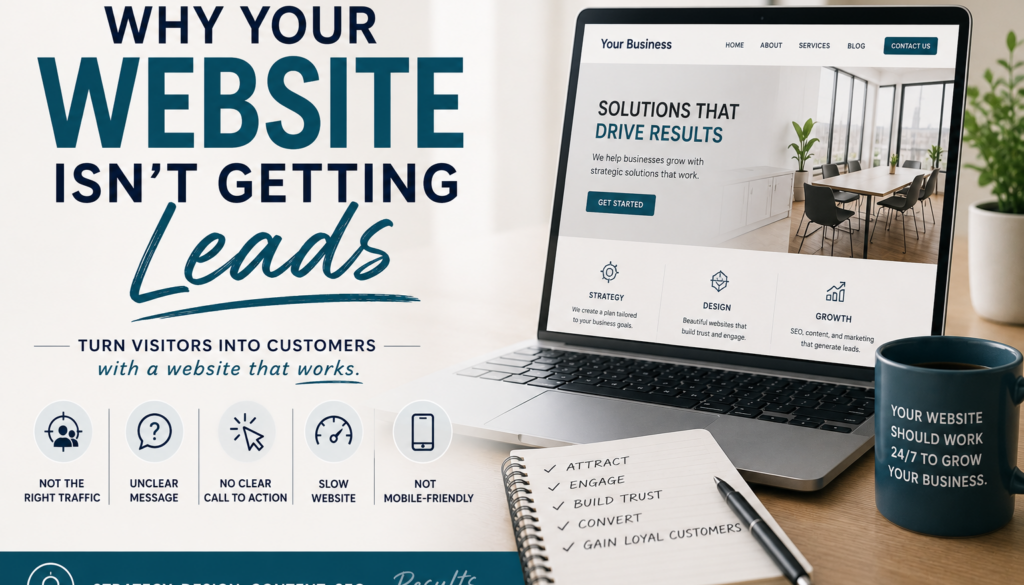
Why Your Website Isn’t Getting Leads (And What You Can Do About It)
You’ve invested in a website.
It looks nice. It has your logo, your services, and your contact information.
So why isn’t it generating leads?
It’s one of the most common questions we hear from business owners. The truth is, a website isn’t just a digital brochure—it should be one of your hardest-working sales tools. If your website isn’t bringing in new customers, there’s usually a reason.
Let’s look at some of the most common issues.
1. You’re Getting Traffic, But Not the Right Traffic
Not all website visitors are potential customers.
If people are finding your website through searches unrelated to your services—or they’re visiting without understanding what you offer—they’re unlikely to become leads.
A strong SEO strategy helps attract the people who are actively searching for the products or services you provide.
2. Your Message Isn’t Clear
Imagine walking into a store where nothing is labeled.
You wouldn’t know where to start.
The same thing happens online.
Within a few seconds, visitors should understand:
- What you do
- Who you help
- Why you’re different
- What they should do next
If your homepage doesn’t answer those questions quickly, visitors often leave before exploring further.
3. There’s No Clear Call to Action
After someone learns about your business, what’s the next step?
Many websites leave visitors guessing.
Instead of making people search for contact information, guide them with clear calls to action like:
- Schedule a Consultation
- Request a Free Quote
- Contact Our Team
- Book an Appointment
- Get Started Today
Every page should encourage visitors to take the next step.
4. Your Website Loads Too Slowly
People expect websites to load almost instantly.
If your pages take several seconds to appear, many visitors won’t wait.
A slow website can hurt both your user experience and your search engine rankings.
Improving page speed often leads to better engagement—and more conversions.
5. Your Website Was Built for You, Not Your Customer
Business owners naturally want to talk about their company.
Customers want to know how you can solve their problem.
Instead of focusing on your history or achievements, answer the questions your audience is already asking.
Think less about “Who we are.”
Think more about “How we can help you.”
6. It Isn’t Mobile-Friendly
More than half of all website traffic comes from mobile devices.
If visitors have to pinch, zoom, or struggle to navigate your website on their phone, they’re likely to leave.
A responsive website isn’t optional anymore—it’s expected.
7. You’re Missing Trust Builders
Before contacting a business, most people want reassurance.
Ask yourself:
- Do you have recent reviews?
- Are there testimonials from satisfied customers?
- Do you showcase real projects or case studies?
- Are your certifications or awards visible?
- Is your contact information easy to find?
Trust isn’t built with one sentence. It’s built through consistent proof that you’re reliable.
8. Your Content Isn’t Answering Questions
Today’s customers research before they buy.
If your website only lists services without educating visitors, you’re missing opportunities to build trust.
Helpful blogs, FAQs, guides, and resources position your business as the expert—not just another option.
9. You’re Not Measuring What’s Happening
Many businesses don’t know:
- How many people visit their website
- Where visitors come from
- Which pages perform best
- Where visitors leave
- Whether anyone fills out a contact form
Without data, it’s difficult to know what’s working—or what needs improvement.
Tools like Google Analytics and Google Search Console provide valuable insights that can help improve your website over time.
Your Website Should Work Around the Clock
Your website shouldn’t simply exist.
It should:
- Attract qualified visitors
- Build trust
- Answer questions
- Showcase your expertise
- Encourage action
- Generate leads—even while you’re sleeping
If it isn’t doing those things, it may be time to rethink your strategy.
The Bottom Line
A beautiful website doesn’t automatically grow your business.
The best-performing websites combine thoughtful design with strategic messaging, search engine optimization, valuable content, and a user experience that guides visitors toward taking action.
At Stinson Communications, we believe your website should be more than an online presence. It should become a powerful marketing tool that helps your business attract the right audience, build credibility, and generate meaningful results.
Because your website shouldn’t just look good.
It should help your business grow.