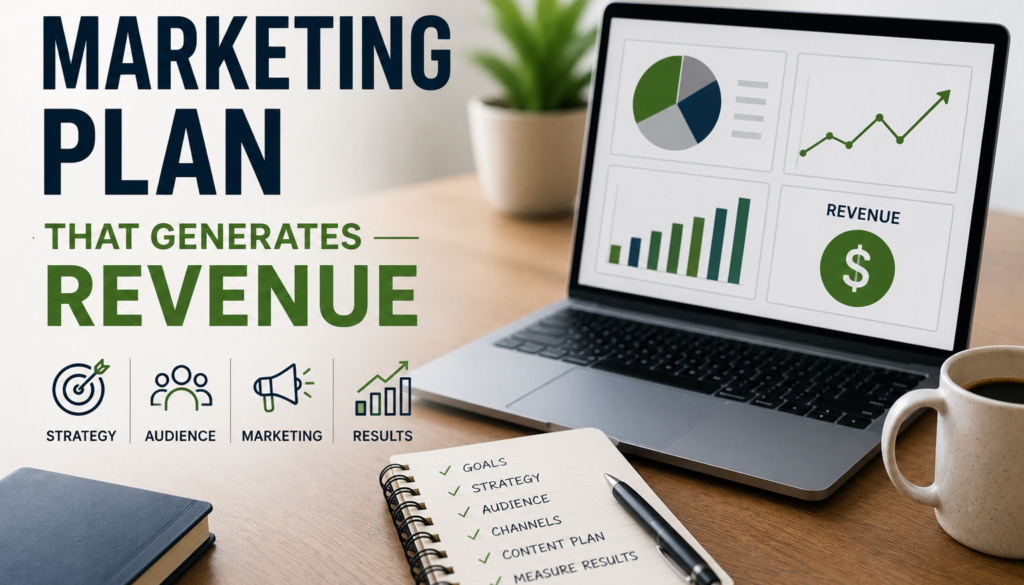
How to Build a Marketing Plan That Actually Generates Revenue
Every January, thousands of businesses create marketing plans.
They schedule social media posts.
Set advertising budgets.
Brainstorm promotions.
Write goals on a whiteboard.
And by March?
Many of those plans have already been abandoned.
Why?
Because they were built around marketing activities, not business outcomes.
A successful marketing plan isn’t measured by how many posts you publish or how many emails you send.
It’s measured by whether it helps your business generate revenue.
Here’s how to build a marketing plan that actually works.
Start With Revenue Goals—Not Marketing Goals
Many businesses begin with goals like:
- Post on Facebook three times a week.
- Write two blogs each month.
- Increase Instagram followers.
- Send a monthly newsletter.
Those are marketing activities.
Instead, ask:
- How much revenue do we want to generate this year?
- How many new customers do we need?
- What’s our average sale?
- How many qualified leads will it take to reach those goals?
When you start with revenue, every marketing decision becomes more intentional.
Know Your Numbers
Marketing becomes much easier when you understand your business metrics.
Important numbers include:
- Average customer value
- Profit margins
- Customer lifetime value
- Conversion rate
- Cost per lead
- Close rate
- Monthly revenue goals
These numbers help determine how much marketing you actually need—not just how much you want to do.
Understand Your Ideal Customer
Not everyone is your customer.
The more clearly you define your audience, the more effective your marketing becomes.
Consider:
- Who benefits most from your services?
- What problems do they need solved?
- What questions do they ask?
- Where do they spend time online?
- What motivates them to buy?
Great marketing speaks directly to the people most likely to become customers.
Build a Complete Customer Journey
Marketing doesn’t stop after someone visits your website.
Think about each stage:
Awareness
How do people discover your business?
Examples:
- Google Search
- Google Business Profile
- Social media
- Advertising
- Referrals
Consideration
Why should someone choose you?
Examples:
- Website
- Reviews
- Blog articles
- Testimonials
- Videos
Decision
What encourages someone to take action?
Examples:
- Contact forms
- Free consultations
- Clear calls to action
- Online scheduling
Retention
How do you keep customers coming back?
Examples:
- Email marketing
- Helpful content
- Follow-up communication
- Customer appreciation
Each stage supports long-term revenue growth.
Choose Marketing Channels That Fit Your Business
You don’t need to be everywhere.
Focus on the channels most likely to reach your audience.
That might include:
- SEO
- Google Ads
- Social media
- Email marketing
- Content marketing
- Local SEO
- Community involvement
The right strategy depends on your business—not the latest trend.
Create Content With Purpose
Every blog.
Every social media post.
Every advertisement.
Every email.
Each should support your larger business goals.
Before publishing anything, ask:
“What job is this content supposed to do?”
Purpose-driven content produces better results than random posting.
Measure What Matters
One of the biggest mistakes businesses make is tracking activity instead of outcomes.
Instead of celebrating:
- Likes
- Followers
- Impressions
Focus on:
- Qualified leads
- Website conversions
- Phone calls
- Sales
- Revenue
- Return on investment
These metrics tell you whether your marketing is helping your business grow.
Adjust Along the Way
A marketing plan shouldn’t sit untouched for twelve months.
Review it regularly.
Ask:
- What’s working?
- What’s underperforming?
- Where are new opportunities?
- What should we improve next?
The best marketing strategies evolve as your business grows.
Strategy Creates Revenue
Marketing doesn’t generate revenue simply because it exists.
It generates revenue because every piece works together.
Your website.
Your SEO.
Your advertising.
Your content.
Your branding.
Your customer experience.
When those elements align, your marketing becomes far more effective.
The Bottom Line
A successful marketing plan isn’t built around checking tasks off a list.
It’s built around helping your business reach measurable goals.
At Stinson Communications, we help businesses create customized marketing strategies that connect every activity to a larger objective. From websites and SEO to advertising, content, and analytics, we focus on building marketing systems designed to generate qualified leads, strengthen customer relationships, and support long-term revenue growth.
Because marketing shouldn’t just keep you busy.
It should help your business become more profitable.