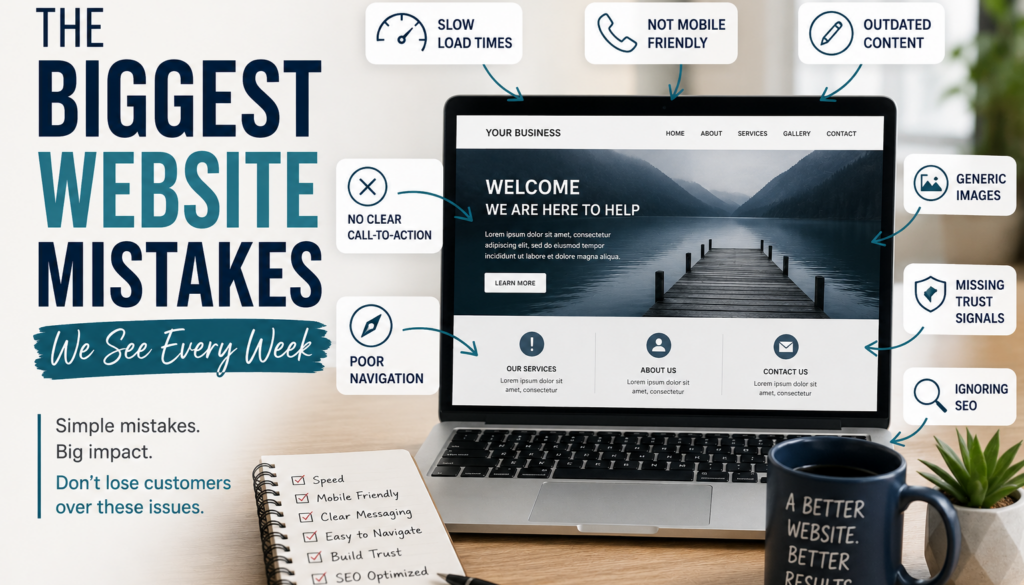
The Biggest Website Mistakes We See Every Week
Your website should be your hardest-working employee.
It never takes a day off. It’s available 24/7, often making a first impression long before a customer ever picks up the phone or walks through your door.
Yet every week, we review websites that unintentionally drive potential customers away—not because the businesses aren’t great, but because their websites create unnecessary friction.
Here are some of the biggest website mistakes we see—and how you can avoid them.
1. No Clear Call-to-Action
After someone lands on your website, what should they do next?
Too many websites leave visitors guessing.
Whether your goal is to have customers:
- Call your office
- Request a quote
- Schedule a consultation
- Visit your showroom
- Make a purchase
your call-to-action should be obvious on every page.
If visitors have to search for the next step, many simply leave.
2. Slow Load Times
Patience online is measured in seconds.
Large image files, outdated plugins, poor hosting, and unnecessary code can dramatically slow your website.
A slow website can lead to:
- Higher bounce rates
- Lower Google rankings
- Lost sales
- Frustrated visitors
Speed isn’t just a technical issue—it’s part of the customer experience.
3. Mobile Isn’t Really Mobile-Friendly
More than half of all website traffic now comes from mobile devices.
Unfortunately, we still see websites where:
- Text is too small
- Buttons are difficult to tap
- Images don’t resize properly
- Menus are confusing
- Contact information is hard to find
If customers can’t easily navigate your site from their phone, they’ll often move on to a competitor.
4. Outdated Content
Nothing makes a business look inactive faster than old information.
Examples include:
- Events from years ago
- Employees who no longer work there
- Expired promotions
- Broken links
- Services you no longer offer
Regular updates show both customers and search engines that your business is active and engaged.
5. Weak Homepage Messaging
Many homepages talk about the business instead of speaking to the customer.
Visitors should immediately understand:
- What you do
- Who you help
- Why you’re different
- What action they should take next
If someone has to scroll halfway down the page to figure out what your company does, your messaging needs work.
6. Poor Navigation
Customers shouldn’t have to hunt for information.
Your navigation should make it easy to find:
- Services
- About Us
- Contact information
- Pricing (when appropriate)
- FAQs
- Testimonials
Simple navigation creates a better user experience and keeps visitors engaged longer.
7. Missing Trust Signals
People want reassurance before they choose a business.
Your website should build confidence with:
- Customer reviews
- Testimonials
- Awards
- Certifications
- Industry affiliations
- Case studies
- Photos of your actual team
Trust is one of the biggest factors influencing buying decisions.
8. Generic Stock Photography Everywhere
Stock photos can have a place, but they shouldn’t represent your entire business.
Customers want to see:
- Your team
- Your office or showroom
- Your work
- Your products
- Your customers (with permission)
Authentic photography helps people connect with your brand and builds credibility.
9. Forgetting About SEO
A beautiful website won’t help if no one can find it.
Every page should be optimized with:
- Unique page titles
- Meta descriptions
- Relevant keywords
- Helpful content
- Proper headings
- Optimized images
Search engine optimization helps your website work long after it’s published.
10. Treating the Website Like It’s Finished
Perhaps the biggest mistake is thinking a website is a one-time project.
Successful websites continue to evolve.
They grow through:
- Fresh blog content
- New service pages
- Updated photography
- Better SEO
- Customer testimonials
- Performance improvements
- Ongoing testing
The businesses that consistently improve their websites are often the ones that continue attracting new customers year after year.
Your Website Should Work as Hard as You Do
Your website isn’t just an online brochure—it’s often your most valuable marketing asset.
A well-designed website builds trust, answers questions, generates leads, and supports your business around the clock.
The good news? Most website problems aren’t permanent. Small improvements can make a significant difference in how customers experience your business and how well your website performs in search results.
Is Your Website Helping or Hurting Your Business?
If your website hasn’t been updated in years—or you’re not sure whether it’s performing as well as it should—it may be time for a fresh evaluation.
At Stinson Communications, we help businesses improve their websites through strategic design, search engine optimization, content development, and user experience enhancements that turn visitors into customers.
Your website should do more than exist—it should help your business grow.