How Often Should You Post on Social Media?
If you’ve ever found yourself asking, “How often should I be posting on social media?”—you’re not alone.
It’s one of the most common questions we hear from business owners.
Some people say you should post every day.
Others claim multiple times a day is the only way to stay relevant.
Then there are the business owners who feel guilty because they haven’t posted in weeks.
So, what’s the right answer?
The truth is, there isn’t a magic number.
The best posting schedule is one that is consistent, intentional, and sustainable for your business.
Consistency Matters More Than Frequency
Posting every day doesn’t automatically lead to more customers.
If you’re posting just to fill your feed, your audience will notice.
One thoughtful, engaging post each week is often more valuable than seven rushed posts that don’t provide any real value.
Consistency helps your audience know what to expect—and it signals to social media platforms that your business is active.
Quality Always Beats Quantity
Before you hit “Post,” ask yourself:
- Does this educate someone?
- Does it answer a common question?
- Does it solve a problem?
- Does it showcase our expertise?
- Does it help build trust?
If the answer is yes, it’s worth sharing.
If not, it may be better to wait until you have something meaningful to say.
Every Business Is Different
A local restaurant may post daily because their specials and events change frequently.
A law firm may only need to post once or twice a week with educational content.
A furniture store may post new arrivals, decorating tips, and promotions several times each week.
The ideal posting frequency depends on:
- Your industry
- Your audience
- Your goals
- The type of content you’re creating
- The time you can realistically dedicate to social media
Don’t compare your business to someone else’s.
Focus on Building Relationships
Social media isn’t just about broadcasting your message.
It’s about having conversations.
That means responding to comments, answering messages, thanking customers for reviews, and engaging with your community.
A business that posts every day but never interacts with followers may see less success than a business that posts less often but actively builds relationships.
Create Different Types of Content
Your audience doesn’t want to see the same sales message over and over again.
A healthy mix of content keeps your pages interesting.
Consider sharing:
- Educational tips
- Behind-the-scenes photos
- Customer testimonials
- Frequently asked questions
- Team introductions
- Community involvement
- Blog articles
- Product or service highlights
- Seasonal promotions
- Success stories
When your content provides value, people are much more likely to engage with it.
Don’t Forget About Your Other Marketing Channels
Social media is important—but it shouldn’t be your only marketing strategy.
You don’t own your Facebook page or Instagram account.
Algorithms change.
Platforms change.
Your website, email list, blog, and Google Business Profile are just as important.
The strongest marketing strategies combine multiple channels that work together.
A Realistic Posting Schedule
For many small businesses, this is a practical starting point:
- Facebook: 2–4 posts per week
- Instagram: 2–4 posts per week
- LinkedIn: 1–3 posts per week
- Google Business Profile: 1 update each week
- Blog: 1–2 articles per month
- Email Newsletter: 1–2 per month
Remember, these are guidelines—not rules.
The best schedule is one you can maintain consistently.
Plan Ahead
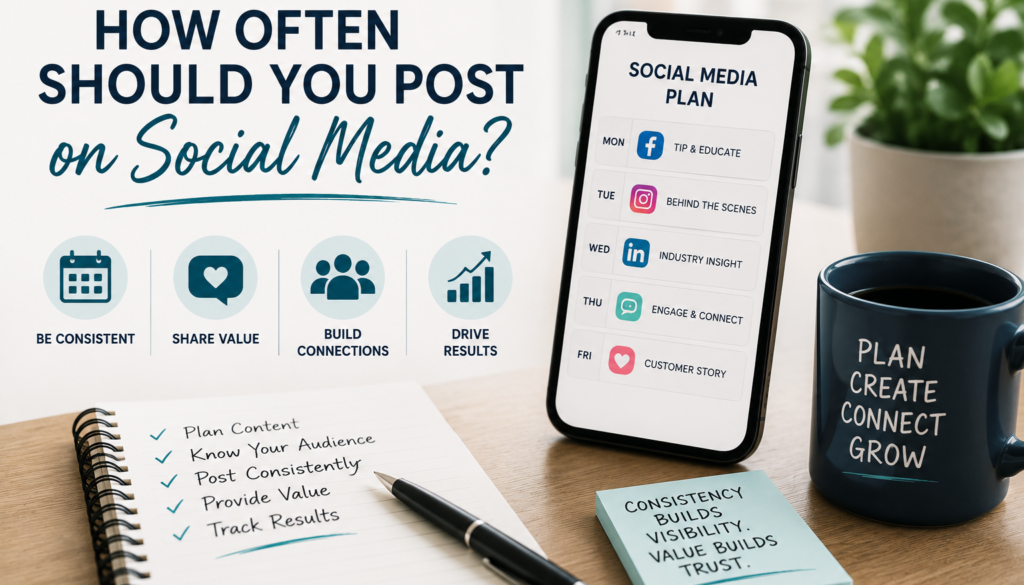
One of the easiest ways to stay consistent is by creating a content calendar.
Planning your posts in advance reduces stress, keeps your messaging aligned, and helps you avoid scrambling for ideas at the last minute.
Instead of asking, “What should we post today?”
You’ll already know.
The Bottom Line
Success on social media isn’t measured by how often you post.
It’s measured by the value you provide, the relationships you build, and the consistency you maintain over time.
At Stinson Communications, we help businesses create strategic social media plans that focus on meaningful engagement—not just more posts. From content calendars and graphics to copywriting and paid campaigns, we help our clients show up consistently with content that supports their business goals.
Because the goal isn’t simply to post more.
It’s to post with purpose.